Tuesday, July 25, 2006

Ashwagandha Rasayana -- An Introduction

That which supports natural immunity by enhancing physical and mental strength, promotes overall health and longevity, is bitter, astringent and warming, and extremely beneficial for heart-mind-body coordination is Ashwagandha." -- Bhavprakash

Ashwagandha (Winter Cherry or Withania somnifera) is considered by ayurvedic healers to be a potent rasayana for both mind and body.

Some specific benefits of Ashwagandha
  • Ashwagandha is classified as a somanasyajanana herb in ayurveda--an herb that enhances the natural ability of your mind to adapt to stressful situations. It helps elevate the strength of the mind to match heightened stress levels as needed. In modern terms, Ashwagandha is classified as an adaptogen--it helps boost your natural ability to withstand stress only when a heightened response is called for, such as during physical or mental competition, or in times of additional pressure at school or on the job.
  • According to PNI (psychoneuroimmunology) theory, stress can depress your immune system. Distress increases the flow of the stress hormones cortisol and beta-endorphins, whereas eustress (positive emotional condition opposite to distress) helps to boost the immune system by increasing levels of antibody immunoglobulins. Ashwagandha, by helping to boost your natural ability to handle stress, helps strengthen the immune system as well.
  • When stress-handling ability is deficient, Vata dosha typically is out of balance, and this leads to difficulty falling asleep. By improving your natural ability to handle stress and enhancing the mind-body-senses coordination, Ashwagandha promotes restful sleep as well.
  • Ashwagandha is extremely nourishing for the nervous system. It helps strengthen the nerves and maintain nerve function.
  • Ashwagandha is an anti-inflammatory, and helps pacify Vata imbalance in the joints. Because of its warming, penetrating quality, Ashwagandha also helps improve circulation.
  • Traditional texts state that Ashwagandha helps maintain physical strength, stamina and endurance. It is said to impart to its user the strength and vigor of a horse. Its action has been compared to that of ginseng--in fact, Ashwagandha is also called "Indian ginseng."
  • Ashwagandha is considered a tonic for the reproductive system, especially for men. It helps support a healthy libido.
  • Ashwagandha is a medhya rasayana, helping to enhance mental ability and performance--it helps support memory and problem-solving skills and enhances the coordinated functioning of all aspects of the brain.

Saturday, July 22, 2006

A Y U L I N K - from Dr. Prerak Shah, India

Sharing Thoughts

Health Tips : Keeping Well When Monsoon Dwells
First showers of monsoon are heartily welcomed by everyone after experiencing the scorching heat of summer. But monsoons reduce the immunity of our body and make us susceptible to many diseases which are commonly associated with this season. It is time for us to keep our body resistant against diseases by boosting our immunity and taking precautions against these diseases.

The diseases associated with monsoon are malaria, jaundice, gastro intestinal infections like typhoid and cholera. Apart from these, viral infections like cold and cough also make their presence felt.

Puddles of water formed due to rain become breeding grounds for mosquitoes which spread diseases like malaria and dengue fever. As a precautionary measure against mosquito bite born diseases one can use mosquito net around the bed which is better choice to mosquito repellants like mats and coils. A mosquito repellant cream is the best choice when you are away from home. Fumigating the house with smoke of dried neem leaves in evenings for 1-2 minutes is an excellent ayurvedic method to keep mosquitoes away.

Pollution of drinking water during monsoon is very common. It is very necessary to drink clean and pure water when water borne monsoon diseases like diarrhea and gastro intestinal infections threaten us. Drinking boiled water at home is strongly recommended to tap water. Prefer mineral water of government certified companies when you are away from home. (Cont…..)

Published with consent of author Dr. Savitha Suri, doctor@ayurhelp.com
This article is copy righted. The author Dr.SavithaSuri is an Ayurvedic Physician and web master of http://www.ayurhelp.com/
http://www.ayurhelp.com/articles/mansoon_care.htm
:: Health & Disease Treatment suggestions for Depression (Dr. Shah's views)

Hello Doctor
I am 26 years old. I suffered from mild anxiety and depression so i tried anti depressants i tried three different kind and none of them worked they made me paranoid. first one i tried was cipralex for one week remeron for another week and then cipramil for one week i felt horrible with all of them so i decided to stop and thank God i have managed to deal with my anxiety.
My suggestions for Depression and all psycho-somatic conditions are;

First and most important is Meditation or Pranayam. Than second if Shirodhara treatment with qualified Ayurveda practitioner and for internal use of herbs I suggest, Brahmi Tablet, Ashwagandha Powder and Triphala Tab. If such suffering person can spend 3 to 4 weeks in India for detoxification (Panchkarma) programs, he / she can be much relieved from associated complains.
Exclusive Offer for Panchkarma Treatments @ lowest rates.

New Yahoo! Ad Campaign: Health Club

New Yahoo! Ad Campaign: Health Club

A "New Yahoo.com" commercial from Yale Film School.

Husband and wife get in an argument at the gym - a "New Yahoo.com" commercial by Colin Montgomery from Yale...

Ayurvedic Spa and Holistic Medical Spa Training Program

We specialize in authentic ayurveda treatments such as panchakarma – the ayurveda detox, shirodhara and abhyanga - ayurveda oil bath and massage, as well as specially formulated ayurveda packages for rejuvenation, beauty and weight loss.

Panchakarma

The clinic and school also offers ayurveda courses, as well as vastu and ayurvedic cooking.
The mysterious techniques of the energetic Ayurvedic Oil Massage and other Ayurveda treatments originated in ancient India. The past years have seen a widespread Ayurvedic Indian Massage culture in France, Germany and the UK and practitioner schools are now popping up in parts of Europe, the U.S. and Canada. One of the key benefits of Ayurvedic Massage is the detoxification effect it has on the entire body.
Ayurveda Asia Co., Ltd. your reliable partner in Medical Spa & Clinic Development and Education Training - we bring different holistic approaches, like Integrated Medicine, Traditional Chinese Medicine and Ayurvedic Medicine together.

Ayurveda Asia Co., Ltd.

Ayurveda Asia Co., Ltd. helps for staffing healthcare systems, integrated networks, as well as resort/spa medical departments. Likewise, many physicians also realized the benefits offered their patients/clientele by integrating spa services into their practices to augment procedures. Whether you are opening a new Medical Spa, Health Center, Day Spa, Destination Spa, Wellness Center, Health Resort or simply looking to improve an existing one, we can help you.

http://www.dreddyclinic.com/ayurveda_asia.htm

Sunday, July 16, 2006

Some herbal medicines contain potentially toxic amounts of heavy metals

An analysis of a sample of Ayurvedic herbal medicine products found that 20 percent contained metals such as lead, mercury and arsenic at levels that could be toxic if taken as directed, according to a study in the December 15 issue of JAMA.

According to background information in the article, approximately 80 percent of India's one billion population uses Ayurveda, a medical system that originated in India more than 2000 years ago and greatly relies on herbal medicine products (HMPs). Ayurveda's popularity in Western countries has increased. Because Ayurvedic HMPs are marketed as dietary supplements, they are regulated under the Dietary Supplement Health and Education Act (DSHEA), which does not require proof of safety or efficacy prior to marketing. Herbs, minerals and metals are used in Ayurvedic HMPs.

Recent reports of serious lead poisoning associated with taking Ayurvedic HMPs were the impetus for the current study. Robert B. Saper, M.D., M.P.H., formerly of Harvard Medical School, Boston, (currently with the Boston University School of Medicine) and colleagues examined Ayurvedic HMPs manufactured in South Asia and sold in Boston-area stores in order to examine their heavy metal content. From April to October 2003, the researchers purchased 70 different Ayurvedic HMPs at stores within 20 miles of Boston City Hall.

Concentrations of lead, mercury and arsenic were measured in the samples. The potential amount of daily metal ingestion, estimated by using manufacturers' dosage recommendations, was compared to U.S. Pharmacopeia and U.S. Environmental Protection Agency regulatory standards. The researchers found that 14 (20 percent) of the 70 HMPs contained lead, mercury and/or arsenic, and that if taken as recommended by the manufacturer, each of these could result in heavy metal intake above the published regulatory standards. Lead was found in 13 HMPs; mercury in six HMPs; and arsenic in six HMPs.

Half of the HMPs containing potentially toxic heavy metals were recommended for children. The 14 HMPs containing heavy metals were manufactured by 11 different companies. Of the 30 stores visited, 24 sold at least one heavy metal-containing HMP. "… the presence of heavy metals in Ayurvedic HMPs and the numerous reports of associated toxicity may have important public health, clinical, and policy implications in the United States and abroad.

Although the prevalence of heavy metal-containing Ayurvedic HMP use is unknown, the number of individuals at potential risk is substantial," the authors write. "Public health and community organizations should consider issuing advisories to current or previous Ayurvedic HMP users, encouraging them to consult their physicians about heavy metal screening."

"Our findings support calls for reform of DSHEA that would require mandatory testing of all imported dietary supplements for toxic heavy metals," they conclude. (JAMA. 2004; 292: 2868-2873.
Available post-embargo at http://www.jama.com)
Editor's Note: For funding and financial disclosure information, please see the JAMA article.
Contact: Gina DiGravio617-638-8491J
AMA and Archives Journals Website

Sunday, July 09, 2006

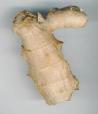
Any sort of cough can be treated with ginger.

Any sort of cough can be treated with ginger. Dry cough, which is due to Vata , responds well to the juice of raw ginger; productive cough, due to Kapha, is better treated with dry ginger and honey. Even shortness of breath, vomiting and giddiness, all due to vitiated Vata, can be conquered with ginger.

Ginger is good in every disease characterized by the accumulation of undigested or partially digested food, known in Ayurveda as Ama. Any Diarrhea or dysentery can be treated with ginger. There is a school of thought which suggests that an individual suffering from dysentery or Colitis follow a diet restricted to lassi , as prepared above with the substitution of / for raw ginger.

Moreover, according to Ayurveda, a patient of any acute disease should never be given plain water to drink.

Moreover, according to Ayurveda, a patient of any acute disease should never be given plain water to drink. The drinking water should e boiled with dry ginger and then cooled and administered in sips. The 'cold' of the water is thus neutralized and the body's digestive 'fire' is protected.
As a remedy, ginger is unsurpassed in diseased due to Kapha and Pitta . There is nothing like it for the common Cold. It has even been found useful in cases of influenza. Some mix dry ginger with honey and lick it from a spoon. Some mix it with gud (solidified molasses), which has the property of making the urine and feces flow freely. Since an important cause of upper respiratory congestion is incomplete evacuation of wastes, ginger and gud are often remarkably effective in relieving such congestion. This combination is good for hiccough also, whether swallowed or inhaled as a snuff. Inhaling it causes a quicker, more direct effect.

Ghee (Ghee Flyer)

Ghee (Ghee Flyer)

Ghee is one of the most valuable foods and medicines known. Ghee may be used in place of butter (it does not cause cholesterol unless there is already a history of high cholesterol). It is an ideal cooking oil as it does not burn unless heated excessively. I makes a wonderful oil for massage and can serve as a base for herbal ointments (for burns, skin rashes, etc.). Ghee is good for all doshas (Vata, Pitta and Kapha) and is a specific for Pitta. Ghee can even be used for lamps (make wicks from a cotton ball).

Ghee keeps indefinitely without refrigeration, as the elements which cause butter to spoil have been removed. Just remember to keep it covered and free from water or other contaminants.
Ghee is mad by cooking butter. It is important to use unsalted butter, available at most supermarkets. Raw unsalted butter (made from unpasteurized cream) is best, but this is difficult to obtain. Ghee is often called clarified butter, but this may be a misnomer. Ghee requires a longer cooking time and the foam which rises to the surface during the cooking process is not skimmed off as may be done when clarifying butter.

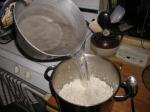
It is convenient to make two pounds at one time, but in the beginning, you may wish to start with just one pound. Place the butter in a heavy saucepan, preferably one of stainless steel or glass. Melt the butter and continue cooking over moderate heat so that the butter just boils gently. Foam will rise to the surface, but this should not be skimmed off. After fifteen or twenty minutes, the foam will have settled to the bottom where it will begin to form a sticky "cake". At this point, the Ghee must be watched carefully to avoid burning. It may be stirred occasionally with a clean, dry spoon, preferably of stainless steel. When the Ghee begins to boil silently, with only a trace of air bubbles on the surface, it is done. Allow it to cool and then pour it carefully into clean containers (making sure that the sediment remains on the bottom of the saucepan).

Ayurvedic Diet and Diet Consultations

General Principles


  • Eat to about 3/4 your capacity. Do not leave the table very hungry or very full.
  • Avoid taking a meal until the previous meal has been digested. Allow approximately 3 - 6 hours between meals.
  • Eat in a settled and quiet atmosphere. Do NOT do work, read or watch TV during meal times.
  • In general, the diet should be balanced so as to include all six tastes. Specific recommendations may be found according to your constitutional type (see accompanying sheet).
  • Yogurt, cheese, cottage cheese and buttermilk should be avoided at night.
  • Milk is generally not recommended to be taken along with a meal involving mixed tastes (i.e., vegetables, meats, fish, etc.). It may be taken with toast, cereals, or sweet tasting foods, or separated from the meal by about 20 minutes.
  • It is best not to cook with honey.
  • Take a few minutes to sit quietly after a meal before returning to your activity.

more:

Thursday, July 06, 2006

Ayurvedic Home remedy for backache

Ayurvedic Home remedy for backache

Remedy Ingredients
• Nirgundi leaves (hindi - samhaalu) (Bot- Vitex negundo) (Eng - Five leaved chaste)
• Karanja leaves ( hindi - Ditauri) (Bot - Pongamia pinnata) (Eng - Indian beech)Collect fresh leaves of Nirgundi and Karanja. Tie them in a thin cotton cloth to form a big ball. Boil this leaves' ball in water and when it is tolerably hot apply this on affected part. When the leaves become cold reheat them by putting the leaves' ball in boiling water. After half an hour take out the leaves from bal, grind them to a paste and bind it on affected area.
By Dr.Savitha SuriIntroduction

Tips for software professionals to avoid back pain:

1. Select a correct chair, with a relatively straight back and good lower back support. If the chair doesn't offer lower back support, keep a rolled up towel or cushion to support the back.
2. Correctly position the chair, keyboard, and monitor. Feet should be on the floor, with knees at hip level; forearms should form a right angle with upper arms; and the computer terminal should be at eye level.
3. Adopt a relaxed, upright working posture and allow the chair to support.
4. Avoid slouching forward or leaning back too far.
5. When you are at work stand up, walk around, stretch forward, backward, and side to side once in 30 minutes.
6. Increased stress and strain enhances the chances of back pain. Hence remember to relax! Yoga and meditation are best techniques to relax
7. Eat healthy food which is rich in fiber. Avoid sweets, oil, soft drinks and overeating to reduce the chances of weight gain.
8. Sex should be avoided during acute stage of back pain as it exaggerates the condition.

By Dr.Savitha SuriIntroduction

Prevention of back pain

Prevention of Back pain
1. Keep the muscles well conditioned by improving sitting, standing, stretching postures. Well-conditioned muscles are less susceptible to injury.
2. Never bend at the waist or stoop to pick up an object. Instead, lower the body to the level of the object by bending the knees. Grasp the item, hold it close to the body, and raise yourself with your legs while keeping your back straight.
3. Do not lift very heavy objects.
4. Whenever possible, prop yourself up.
5. Lean against a wall or pillar while waiting for a bus or standing in line at the bank.
6. Keep footstools around the house. Alternatively prop up one leg on stool while doing standing chores.
7. Sleep on a firm mattress and find a comfortable position.
8. Wear low-heeled shoes.
9. Standing straight will do wonders for your back.
10. Sit on a comfortable chair that supports the curve of lower back.
11. While sitting for long hours rest feet on a low stool so that knees are above hips.
12. Do not sit or stand in one position for a very long time. Get up periodically and walk for a while.
13. Avoid activities which hurt back.
14. Do not sit in same position for long hours. It may prove hazardous to back. Take break in between and move around.
15. Avoid becoming overweight. Overweight increases the risk of back pain.

By Dr.Savitha SuriIntroduction


Solutions for Back pain

1. Stay calm.
2. A complete bed rest for 24 - 48 hrs relieves back pain in most of the instances. Walk a little every few hours to keep the blood flowing and the muscles toned.
3. Applying vata balancing oil like ksheerabala oil on affected region and Naadi sweda (mild steam bath on affected area ) of affected region relives the pain quickly.

See your doctor immediately if you have any of the following symptoms:
1. If you are above 50 and sudden onset of severe pain or pain localized to spine .
2. Pain due to recent fall or trauma.
3. Pain in hip and leg.
4. Back pain unrelated to posture.
5. Bowel or bladder control problems.
6. Numbness in the groin or rectal area.
7. Extreme weakness in legs.
8. Unsteadiness while walking
9. Fever or weight loss accompanying the pain.
10. Pain that does not lessen over time even after rest

By Dr. Savitha SuriIntroduction

Back pain can be triggered when we sneeze, climb into a car, or bend down to pick up the newspaper.

2. Back pain can be triggered when we sneeze, climb into a car, or bend down to pick up the newspaper.

3. Osteoporosis, osteoarthritis, viral infection, bladder or kidney infection, gynecological problems in women, tumors and trauma may also cause back pain.

4. Lack of motion or hina yoga of karma and bad posture may affect us when we sit or stand for long periods of time. On the other hand repetitive motion or Ati yoga of karma like too much of bending, lifting or twisting also affects our back.

5. Other potential causes for back ache are:
Overweight
• Wearing high heeled shoes
• Carrying heavy weight

The vitiated Vata causes stiffness of joints, pain and limits the movements of back.
By Dr.Savitha SuriIntroduction

The spinal cord is enclosed within vertebral canal which is formed by alignment of vertebrae.

The spinal cord is enclosed within vertebral canal which is formed by alignment of vertebrae. Acharya sushruta describes anatomy of spinal column as follows.
Prushte trimshat - The number of back bones are 30 (Cervical-7, Thoracic – 12, Lumbar- 5, vertebrae fused in sacrum -5, coccyx –1 ). While describing the joints in spinal column it has been said as “ Chaturvimshatihi prishta vamshe “. This means there are 24 joints in spinal column.Maamsaanyatra nibaddhani siraabhihi snaayubhistatha. Asthinyaalambanam kritwaa The ligaments and tendons hold the bones and muscles together.

Causes for back ache. Bones and thighs are mainly occupied by Vata. Vata controls and directs the body movements.

Back pain occurs when vata in this region gets aggravated due to unwise physical activities (mithya yoga of karma), exaggerated physical activities (Ati yoga of karma ) or less physical activities (hina yoga of karma).

1. Back ache usually arises from spasm of muscles that support our spine. The muscles supporting spine go into spasm when we lift things unwisely, bending over too sharply, sitting in a unsuitable chair, etc.
These type of movements are called as “Mithyaa yoga of karma or action” in ayurveda.

By Dr.Savitha SuriIntroduction

Back pain

Back pain is the most common complaint among adults under 45. Back pain brings their activities to a complete halt and intervenes in the progress of their career. Researchers say that it is really a challenge to a physician to find out the true cause of back pain.

Here is a quick take on the anatomy of the human back. Our body depends on the spinal column for structural stability and mobility. We twist, bend and flex with the help of spinal column.

The spinal column is made up of 24 vertebrae, 7 in the neck (the cervical vertebrae), 12 in the thorax (the thoracic vertebrae), and 5 in the lower back (the lumbar vertebrae).

The sacrum, located just below the lumbar vertebrae, consists of 5 fused vertebrae. The tailbone, or coccyx, with its 3 to 5 fused vertebrae, lies just beneath the sacrum. These vertebrae are placed one on another from skull to pelvis.

Spongy discs are present in between vertebrae .The spinal column is tightly wrapped by muscles and ligaments.

Wednesday, July 05, 2006

The Transmission Of genital Herpes

A person can get genital herpes in following conditions

1. If he is sexual active and when he performs sex (oral or genital) with infected partners.
2. A person who has oral herpes transmits herpes to genital organs of a partner during oral sex and a person who has genital herpes transmits this to his partner during coitus when they have a genital contact.
3. The disease gets transmitted when mucous membrane comes in contact with infected area.

The disease gets transmitted mostly during active phase. But it may spread even during asymptomatic (when person is free of symptoms for a particular duration) phase. The virus needs a fluid media for its transportation. The body fluids like saliva, semen, vaginal tract secretions etc. Mucous membranes in mouth, vagina, urethra or open wounds facilitate the virus invasion due to their moistness.

In Genital herpes there is an imbalance of all three doshas (Vata, Pitta, Kapha), which in turn vitiate lasika (lymph), blood (rakta), muscle (mamsa) and skin (twacha).The imbalanced doshas vitiate skin and the immunity of skin cells is lowered. The virus attacks these weak cells and starts exhibiting symptoms on affected area.

Local symptoms
1. Pricking sensation
2. Edema
3. Pain
4. Feeling of constriction
5. A sensation of ant creeping
6. Many small eruptions gathering in a small area.
7. These eruptions or blisters burst soon with exudates.
8. These blisters will have different colors according to involvement of doshas.

(Blackish red or blue in Vata, red, yellow, copper colored in Pitta, shades of white in kapha).The weakened body immune system tries to resist the virus invasion but fails to achieve the goal. In this futile attempt the following systemic symptoms are exhibited.

By Dr.Savitha Suri

Unhealthy lifestyle

Unhealthy lifestyle
1. Over eating
2. Sleeping in afternoons.
3. Over physical exertion.
4. Over mental exertion
5. Consuming food frequently even when not hungry.
6. Constant exposure to hot sunny climates

Unhealthy diet
Excessive consumption of
1. Salty, sour, hot, spicy food.
2. Sour curds
3. Alcohol.
4. Cheese
5. Charred and overcooked food.
6. Sesame, Bengal gram, horse gram, sesame oil, rice flour, garlic, fish.

Opposite foods
1. Curds, salt, mushrooms, bamboo shoots, sour fruits, meat, prawn, pork, should not be consumed with milk. The above-mentioned foods should not be consumed by mixing one item with another.
2. Sprouts, honey and milk should not be consumed with meat and fish.
3. Fish & milk: fish &sugarcane juice; jaggery & pork; honey & pork; milk & mango; banana & milk; are opposite foods.

Causes of Genital Herpes is caused by a virus the herpes simplex virus (HSV), which belongs to the same family of viruses that cause chickenpox.

Causes of Genital Herpes is caused by a virus the herpes simplex virus (HSV), which belongs to the same family of viruses that cause chickenpox. There are two types of herpes simplex viruses

1. Herpes simplex type 1 (HSV-1) and mostly causes oral herpes
2. Herpes simplex type 2 (HSV-2). And mostly causes genital herpes.

However, both type-1 and type-2 can occur in the genitals, oral area or both.
Due to unhealthy life styles and diet the delicate balance between doshas get disturbed. This disturbs the body fire or Agni.
(Agni is the body fire, which is responsible for transformation of one substance to another. It breaks down the food substances, eliminates toxins and wastes, maintains body temperature, and resists the invasion of microbes by maintaining strong body immunity.
The body fire, which is assisted by balanced doshas, digests the food completely to form Pakwa Anna rasa (the liquid form of food which is completely digested by digestive enzymes), which is ready to get absorbed by body tissues. According to ayurveda Pakwa Anna Rasa nourishes the body and its components to keep the body devoid of diseases. But when body fire is impaired there will be an incomplete digestion of food forming Apakwa Rasa (indigested food). The indigested food fails to nourish the body components leading to lowered body resistance.)The disturbed Agni fails to digest the food and toxins get accumulated in body due to improper metabolism. Accumulation of toxins reduces the body immunity and paves the way for invasion by microbes.
When a person who has low immunity comes in contact with HSV virus, he/she gets the genital or oral herpes.

Dosha theory which help in diagnosis of the diseases. kapha.

KAPHA: Kapha provides bulk to body, lubrications, moistness, fertility, stability, strength, and memory. Helps in binding process wherever necessary. This is heaviest of all doshas.
Kapha dominated regions are chest, neck, head, stomach, body fat, nose and tongueKapha gets vitiated due to following reasons.

1. Sleeping in daytime.
2. Consuming sweets, chilled food, in excess.
3. Consuming fish, sesame, sugarcane, milk and milk products.

The opposites of above-mentioned reason normalize the vitiated kapha.
When these doshas are in balanced condition the body remains healthy. If these doshas get imbalanced the body succumbs to diseases. Doshas get imbalanced frequently due to change in climate, seasons, lifestyles, diet etc.

The treatment is to bring back the doshas to normalcy and expel the toxin or ama produced during the imbalanced condition.
By Dr.Savitha Suri

Dosha theory which help in diagnosis of the diseases. Pitta

PITTA: The pitta dosha assists the body fire or Agni, which plays a major role in body’s metabolic activities. The locations where pitta dominates are digestive system, skin, eyes, brain, and blood. Pitta maintains body temperature. The secretions like digestive juices pigments like melanin (bhrajaka pitta), hemoglobin (ranjaka pitta) are all types of pitta.

Pitta is dominant in regions of Umbilicus, stomach, sweat, lymph, blood, eyes and skin.Vata gets vitiated due to following reasons.

1. Excess consumption of spicy, sour, salty foods.
2. Consuming alcohol in excess.
3. Over exposure to hot sunny climate.
4. Short temperedness.
5. Using dried vegetables.
6. Indigestion of food.

The opposites of above-mentioned reason normalize the vitiated pitta.
By Dr.Savitha Suri

Dosha theory which help in diagnosis of the diseases

According to ayurveda three doshas or three energetic forces control the activities of the body.

These doshas are
1. Vata
2. Pitta
3. Kapha

VATA: The Vata dosha is the most important of the three doshas. It has been said in ayurveda classic books that “ pitta , Kapha and all other body tissues are considered lame without assistance of VATA .” Vata dominates the lower part of the body, which is below umbilicus. The movements of body fluid, metabolism, elimination of waste products, semen ejaculation, pushing the fetus out of body, relaying stimulus to brain and response to organs and tissues, heart beat, respiration, body movements etc are assisted by VATA. Vata dominated regions are intestines, lumbar region, ears, bones and skin. Vata gets vitiated due to following reasons.
1. Controlling natural urges like urination, defecation, hunger, thirst, etc.

2. Late nights.
3. Irregular food habits.
4. Talking in a high pitch.
5. Over physical and mental exertion.
6. Consumption of spicy, dry, bitter foods.
7. Exposure to severe dry and cold climate.

The opposites of above-mentioned reason normalize the vitiated vata.
By Dr.Savitha Suri

Health Begins In The Colon

Health Begins In The Colon

$19.99
[ learn more ]

Add to Cart

The REAL Secret to Health is Finally Revealed! Did you know that disease starts and health begins in the colon? You can read more about how to better your health in Dr. Group's exclusive book