(HealthDay News) -- Having trouble remembering things with age? A new study in rats finds that stem cells in aging brains divide less frequently, leading to a dramatic drop in the number of new nerve cells being born in the hippocampus, the brain's learning and memory center.
The finding, published in the journal Neurobiology of Aging, also suggests that it may be possible to stimulate the brain's ability to produce new brain nerve cells in order to treat neurodegenerative diseases such as Alzheimer's, depression and dementia, said senior study investigator Ashok K. Shetty, professor of neurosurgery at Duke University Medical Center in Durham, N.C., and a medical research scientist at Durham VA Medical Center.
For this study, the researchers attached fluorescent tags to neuronal stem cells in the hippocampus of young, middle-aged and old rats. In young rats, the hippocampus contained 50,000 stem cells. This number did not decrease with age, which means that decreased production of new neurons in aging brains is not related to a lack of stem cells.
The researchers then analyzed neuronal stem cell division in the rats and found that 25 percent of neuronal stem cells were actively dividing in young rats, compared with 8 percent in middle-aged rats and 4 percent in old rats.
"This discovery provides a new avenue to pursue in trying to combat the cognitive decline associated with conditions such as Alzheimer's disease and with aging in general," lead investigator Bharathi Hattiangady, a neurosurgery research associate at Duke, said in a prepared statement.
The researchers are now exploring methods of stimulating the brain to replace its own cells in order to improve memory and learning in the elderly.
More information
The American Academy of Family Physicians has more about memory and aging.
Sunday, December 24, 2006


Happy Holidays, Without the Weight Gain
 (HealthDay News) -- From now until New Year's, it's a season of eating, drinking and, well, more eating and drinking.
And worrying about how all those extra calories will translate into extra pounds the next time you dare to step on the scale.
Relax. It doesn't have to be another holiday of nail-biting between nibblings, experts say. All you need is the proper attitude and proven strategies that work to keep your calories-in, calories-out equation balanced.
Anyone who's fought with the scale over the holidays (or shoved it under the bed) knows the basic tricks: Drink water or eat an apple before heading out to a party. Or say, "No, thank you," nicely but firmly, when Aunt Hattie offers you a giant piece of pecan pie a la mode for the fifth time.
But other strategies and perspectives may be new to you.
"Perspective is key during the holiday season," said Jeannie Moloo, a registered dietitian in Roseville, Calif., and an American Dietetic Association spokeswoman. "It's not the best time of year for weight loss. Focus instead on maintaining a healthy weight, not on losing."
Keep that focus when you're faced with a huge buffet or Mom's homemade cooking, added Leslie Bonci, a registered dietitian and director of sports medicine nutrition at the University of Pittsburgh Medical Center. Don't deprive yourself -- but don't give free rein to your gastronomic impulses, either.
"You can enjoy everything, but cut it by a third," she said. "Instead of having three cookies, have two. Instead of a two-inch slice of pie, try for about a one-and-a-half inch slice. Instead of a big scoop of both stuffing and potatoes, have a half scoop of each."
And don't forget the "calories-out" part of the equation. "Always look for opportunities to move. Make sure getting some daily physical activity during the holidays remains a priority," Moloo said. "It can be challenging with shorter days and hectic schedules to keep physical activity on the calendar, but now is not the time to go sedentary."
If you have young kids, you can build physical activity into your day by suggesting a walk to the park or a snowman-building contest or other winter fun. Or you might buddy up with a co-worker and hit the health club or a walking path at least three times a week, after work or during lunch.
You can manage those holiday parties, too, Bonci said, whether you're the host or the guest. As the hostess, she said, "There don't have to be cookies in every room in your house. Set up 'no eating' zones." Your guests will probably thank you, at least silently. It'll give them a chance to avoid temptation and focus on socializing and friendships.
And not everything has to be sugary to be festive. "Use fresh fruit for edible holiday decorations," said Lona Sandon, a registered dietitian at the University of Texas Southwestern Medical Center at Dallas, and a spokeswoman for the American Dietetic Association. "Fill large glass bowls or baskets with washed, fresh fruits."
If you know you'll be tempted with endless party buffets or tables full of family favorites, refresh your memory ahead of time about proper portion sizes, Moloo said.
"Portion size is key to managing weight, especially during the holidays," she said. "A few tips to keep in mind: Keep protein servings [such as your meat dish] to the size of the palm of your hand. Your fat choice -- for instance butter, sour cream, salad dressing -- should be no larger than twice your thumbnail. One cupped hand is a serving of rice or pasta, and a baseball is the size of a potato." Any more, and you're overdoing it.
If you'll be traveling during the holidays, Moloo suggests packing healthy snacks that keep. That way, you'll be less tempted by less-than-healthy airline or airport fare or fast-food outlets along the highway.
If all else fails, remember you have the power over the food, not the other way around. "If you have to, physically remove yourself from the food," Bonci said. At a party, you can walk away and find someone interesting to talk to, or admire your host's artwork or interior design. At home, you might decide to rake leaves or play in the snow, she said.
More information
To learn more about healthy holiday eating, visit the American Dietetic Association.
Psychological Interventions Ease Chronic Low Back Pain
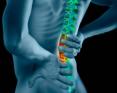 (HealthDay News) -- Psychological treatments such as hypnosis, biofeedback, relaxation and counseling can help relieve chronic low back pain, according to a review in the January issue of the journal Health Psychology.
U.S. researchers examined the findings of 22 studies of patients with low back pain conducted between 1982 and 2003 and concluded that psychological treatments not only improve health-related quality of life and lower the risk of depression, they also reduce patients' experience of pain.
"Because this analysis was both more inclusive and more conservative than previous reviews, we have the best evidence to date that these interventions are helpful," review lead author Robert Kerns, of the VA Connecticut Healthcare System, said in a prepared statement.
Kearns said he and his colleagues were somewhat surprised by the finding that psychological treatments can reduce pain. That's because when psychologists first started to develop these kinds of treatments several decades ago, the objective was to help patients cope with their pain, not to actually lower their pain levels.
"However, a growing body of knowledge suggests that these interventions are actually having a primary effect on people's experience of pain," Kearns said.
The review found that of all the psychological interventions, cognitive-behavioral and self-regulatory treatments seemed to provide the greatest benefits to patients with low back pain.
"Psychological interventions are not cures, but they do reduce pain and improve function, and they are important components in the treatment of people with chronic pain," Dennis Turk, professor of anesthesiology and pain research at the University of Washington in Seattle, said in a prepared statement.
More information
The U.S. National Institute of Neurological Disorders and Stroke has more about low back pain.
Health Tip: Keep the Blood Moving in Your Feet
(HealthDay News) -- The best way to improve blood circulation to your feet is to wear comfortable shoes that fit well, according to the Johns Hopkins University Geriatrics Center.
Here are some tips on buying the right pair of shoes:
- Have your feet measured each time you buy new shoes. Foot width may increase with age.
- The upper part of the shoe should be made of a soft, flexible material to match the shape of your foot.
- Shoes made from leather can reduce the possibility of skin irritation.
- Thick soles lessen pressure on hard surfaces.
- Low-heeled shoes are more comfortable, safer, and less damaging than high-heeled shoes.
Friday, December 15, 2006
What is the Cause of Cancer and Where Does it Begin?
During Week 2 of our Thursday night teleseminar we answered several questions. The following is an overview of those questons and answers.
1) What is the origin of cancer or where does cancer begin?
Cancerous tissue, above all other consequences of choice, has countless secondary causes.
But even for a cancerous condition there is only ONE PRIME ORIGIN and CAUSE.
I have simply summarized this origin and cause of cancerous tissue in a few words.
The prime origin and cause of cancerous tissue is the over-acidification of the blood then the tissues due to lifestyle and dietary choices.
A cancerous tissue begins with our choices of what we eat, what we drink, what we think and how we live. Cancer is a liquid and this liquid is a toxic waste product of metabolism or energy consumption.In 1966, Dr. Otto Warburg, who won the Nobel Prize in Medicine in 1931 for his discovery of the cause of cancer delivered a lecture at an annual meeting of Nobelists at Lindau, Germany.
In his speech he described the primal cause of cancer as follows: "The prime cause of cancer is the replacement of the respiration of oxygen in normal body cells by a fermentation of sugar. All normal body cells meet their energy needs by respiration of oxygen, whereas cancer cells meet their energy needs in great part by fermentation.
All normal body cells are thus obligate aerobes, whereas all cancer cells are partial anaerobes. From the standpoint of the physics and chemistry of life this difference between nomal and cancer cells is so great that one can scarely picture a greater difference.
Oxygen gas, the donor of energy in plants and animals is dethroned in the cancer cells and replaced by an energy yielding reaction of the lowest living forms. namely, a fermentation of glucose."The following is a summary of understanding cancerous tissues:
Cancer is not a cell but a poisonous acidic liquid.A cancer cell, is a cell that has been spoiled or poisoned by metabolic or gastrointestinal acids.A tumor is the body's protective mechanism to encapsulate spoiled or poisoned cells from excess acid that has not been properly eliminated through urination, perspiration, defecation or respiration.
The tumor is the body's solution to protect healthy cells and tissues.
Cancer is a systemic acidic condition that settles at the weakest parts of the body -not a localized problem that metastases. Metastases is localized acids spoiling other cells much like a rotten apple spoiling a bushel of healthy apples.There is no such thing as a cancer cell.
A cancer cell was once a healthy cell that has been spoiled from acid.
The tumor is not the problem but the solution to protect healthy cells and tissues from being spoiled from other rotting cells and tissues.
The only solution to the acidic liquids that poison body cells causing the affect that medical savants call cancer is to alkalize and energize the body.
In conclusion, the human body is alkaline by design and acidic by function! If we desire a healthy body we must maintain that alkaline design.
2) Does diet and lifestyle have anything to do with cancer?
Absolutely!
Cancer is not something we get it is something we do as a consequence of daily choice of what we eat, what we drink, what we think and how we live.
We either have an alkaline lifestyle and diet and enjoy a fit and healthy body or we have an acidic lifestyle and diet and experience the aches, pains and suffering from metabolic acids.
The former US Surgeon General, C. Everett Koop, had this to say about diet:"YOUR CHOICE OF DIET CAN INFLUENCE YOUR LONG TERM HEALTH PROSPECTS MORE THAN ANY OTHER ACTION YOU MIGHT TAKE."
3) If cancer is preventable how do we prevent it?I have said many times that the cure for cancerous tissue will not be found in its treatment but in its prevention.
That prevention can only be obtained by making healthier lifestyle and dietary choices. A cancerous condition is the consequence of choice.
For example, if you want to reduce your risk for cancereous tissue of the lung by 100%, then stop smoking and stop associating or working around people that do smoke.
Secondary smoke is just as acidic and damaging to the lung tissue. If don't want a cancerous liver then stop drinking alcohol and carbonated drinks.
If you don't want a cancerous pancreas then stop eating the acid sugar. If you don't want a cancerous bowel then stop eating protein.
It is that simple. The following are a few research studies from around the world that substantiate my own findings:
Study: Human study at Harbin Medical College in China
Results: CABBAGE was the most important single food in reducing the risk of stomach cancer
Study: Italian study on SmokersResults: Smokers who consumed GREEN LEAFY and other VEGETABLES had a THREE FOLD REDUCTION in their risk of lung cancer with smokers who rarely ate vegetables.
Study: Hebel Cancer Institute in ChinaResults: GARLIC, ONION AND TOMATO had the ability to INHIBIT the CELL MUTATION caused by common chemotherapeutic drugs... this is based on conclusive evidence that chemotherapy drugs cause cell mutations and lead to other types of cancers later in life.
Study: Mayo Clinic
Results: Cancer patients receiving radiation therapy can benefit dramatically from optimal VEGETABLE based diets.Study: University of Athens School of Medicine in GreeceResults: Women who consumed the LOWEST level of vegetables had 10 TIMES the rate of BREAST CANCER compared to women consuming the HIGHEST level of vegetables.
Study: Human study in AustraliaResults: Consumption of CABBAGE, CARROTS AND GREEN LEAFY VEGETABLES substantial protection against COLON CANCER.Study: Aichi Cancer Institute of JapanResults: Eating VEGETABLES reduced the risk of CERVICAL and BREAST CANCER in women.Study: Cancer Control Agency of British ColumbiaResults: Eating VEGETABLES dramatically reduced incidence of BREAST CANCER.
4) If I have cancer, such as colon, lung, or prostate cancer can I reverse it naturally?The answer to this question is absolutely! Once you understand the cause of ALL cancerous tissues as latent tissue acidosis you can then begin the process of reversing, regenerating and preventing the consequences of acidic choices by making healthier alkaline choices.
The protocol for a healthier and energetic body, free from all sickness and dis-ease, is found in Chapter Eleven of our latest book, "The pH Miracle for Weight Loss."In closing, I would like to share with you my vision of medicine in the 21st century.
My vision of the relative purpose of medicine is to include prevention of illness and promotion of health and fitness rather than focusing all our attention on the diagnosis and treatment of disease. I believe the ultimate purpose of medicine is to help people discover something fundamental within themselves.
And that is the awareness that the true source of well-being, joy, and contentment that we all seek lies within one's mind and heart - the emotions and the spirit - not in the physical world. This is important, so we can all begin to be freed from the process of grasping for happiness in this physical world.
To support this approach, I believe we must begin to embrace a more spiritual vision of ourselves and of humanity as a whole. While providing great love, care and attention to the physical body, medicine can then and only then can we help people discover the nonphysical, spiritual dimensions of themselves.
When this happens, we can all live and work with less fear, stress, grasping to preserve the physical body at all costs - we can truly be free.
For more information on pH Miracle Living
1) What is the origin of cancer or where does cancer begin?
Cancerous tissue, above all other consequences of choice, has countless secondary causes.
But even for a cancerous condition there is only ONE PRIME ORIGIN and CAUSE.
I have simply summarized this origin and cause of cancerous tissue in a few words.
The prime origin and cause of cancerous tissue is the over-acidification of the blood then the tissues due to lifestyle and dietary choices.
A cancerous tissue begins with our choices of what we eat, what we drink, what we think and how we live. Cancer is a liquid and this liquid is a toxic waste product of metabolism or energy consumption.In 1966, Dr. Otto Warburg, who won the Nobel Prize in Medicine in 1931 for his discovery of the cause of cancer delivered a lecture at an annual meeting of Nobelists at Lindau, Germany.
In his speech he described the primal cause of cancer as follows: "The prime cause of cancer is the replacement of the respiration of oxygen in normal body cells by a fermentation of sugar. All normal body cells meet their energy needs by respiration of oxygen, whereas cancer cells meet their energy needs in great part by fermentation.
All normal body cells are thus obligate aerobes, whereas all cancer cells are partial anaerobes. From the standpoint of the physics and chemistry of life this difference between nomal and cancer cells is so great that one can scarely picture a greater difference.
Oxygen gas, the donor of energy in plants and animals is dethroned in the cancer cells and replaced by an energy yielding reaction of the lowest living forms. namely, a fermentation of glucose."The following is a summary of understanding cancerous tissues:
Cancer is not a cell but a poisonous acidic liquid.A cancer cell, is a cell that has been spoiled or poisoned by metabolic or gastrointestinal acids.A tumor is the body's protective mechanism to encapsulate spoiled or poisoned cells from excess acid that has not been properly eliminated through urination, perspiration, defecation or respiration.
The tumor is the body's solution to protect healthy cells and tissues.
Cancer is a systemic acidic condition that settles at the weakest parts of the body -not a localized problem that metastases. Metastases is localized acids spoiling other cells much like a rotten apple spoiling a bushel of healthy apples.There is no such thing as a cancer cell.
A cancer cell was once a healthy cell that has been spoiled from acid.
The tumor is not the problem but the solution to protect healthy cells and tissues from being spoiled from other rotting cells and tissues.
The only solution to the acidic liquids that poison body cells causing the affect that medical savants call cancer is to alkalize and energize the body.
In conclusion, the human body is alkaline by design and acidic by function! If we desire a healthy body we must maintain that alkaline design.
2) Does diet and lifestyle have anything to do with cancer?
Absolutely!
Cancer is not something we get it is something we do as a consequence of daily choice of what we eat, what we drink, what we think and how we live.
We either have an alkaline lifestyle and diet and enjoy a fit and healthy body or we have an acidic lifestyle and diet and experience the aches, pains and suffering from metabolic acids.
The former US Surgeon General, C. Everett Koop, had this to say about diet:"YOUR CHOICE OF DIET CAN INFLUENCE YOUR LONG TERM HEALTH PROSPECTS MORE THAN ANY OTHER ACTION YOU MIGHT TAKE."
3) If cancer is preventable how do we prevent it?I have said many times that the cure for cancerous tissue will not be found in its treatment but in its prevention.
That prevention can only be obtained by making healthier lifestyle and dietary choices. A cancerous condition is the consequence of choice.
For example, if you want to reduce your risk for cancereous tissue of the lung by 100%, then stop smoking and stop associating or working around people that do smoke.
Secondary smoke is just as acidic and damaging to the lung tissue. If don't want a cancerous liver then stop drinking alcohol and carbonated drinks.
If you don't want a cancerous pancreas then stop eating the acid sugar. If you don't want a cancerous bowel then stop eating protein.
It is that simple. The following are a few research studies from around the world that substantiate my own findings:
Study: Human study at Harbin Medical College in China
Results: CABBAGE was the most important single food in reducing the risk of stomach cancer
Study: Italian study on SmokersResults: Smokers who consumed GREEN LEAFY and other VEGETABLES had a THREE FOLD REDUCTION in their risk of lung cancer with smokers who rarely ate vegetables.
Study: Hebel Cancer Institute in ChinaResults: GARLIC, ONION AND TOMATO had the ability to INHIBIT the CELL MUTATION caused by common chemotherapeutic drugs... this is based on conclusive evidence that chemotherapy drugs cause cell mutations and lead to other types of cancers later in life.
Study: Mayo Clinic
Results: Cancer patients receiving radiation therapy can benefit dramatically from optimal VEGETABLE based diets.Study: University of Athens School of Medicine in GreeceResults: Women who consumed the LOWEST level of vegetables had 10 TIMES the rate of BREAST CANCER compared to women consuming the HIGHEST level of vegetables.
Study: Human study in AustraliaResults: Consumption of CABBAGE, CARROTS AND GREEN LEAFY VEGETABLES substantial protection against COLON CANCER.Study: Aichi Cancer Institute of JapanResults: Eating VEGETABLES reduced the risk of CERVICAL and BREAST CANCER in women.Study: Cancer Control Agency of British ColumbiaResults: Eating VEGETABLES dramatically reduced incidence of BREAST CANCER.
4) If I have cancer, such as colon, lung, or prostate cancer can I reverse it naturally?The answer to this question is absolutely! Once you understand the cause of ALL cancerous tissues as latent tissue acidosis you can then begin the process of reversing, regenerating and preventing the consequences of acidic choices by making healthier alkaline choices.
The protocol for a healthier and energetic body, free from all sickness and dis-ease, is found in Chapter Eleven of our latest book, "The pH Miracle for Weight Loss."In closing, I would like to share with you my vision of medicine in the 21st century.
My vision of the relative purpose of medicine is to include prevention of illness and promotion of health and fitness rather than focusing all our attention on the diagnosis and treatment of disease. I believe the ultimate purpose of medicine is to help people discover something fundamental within themselves.
And that is the awareness that the true source of well-being, joy, and contentment that we all seek lies within one's mind and heart - the emotions and the spirit - not in the physical world. This is important, so we can all begin to be freed from the process of grasping for happiness in this physical world.
To support this approach, I believe we must begin to embrace a more spiritual vision of ourselves and of humanity as a whole. While providing great love, care and attention to the physical body, medicine can then and only then can we help people discover the nonphysical, spiritual dimensions of themselves.
When this happens, we can all live and work with less fear, stress, grasping to preserve the physical body at all costs - we can truly be free.
For more information on pH Miracle Living
The pH Miracle for Cancer Week 3
During Week 3 of our Thursday night teleseminar on the pH Miracle for Cancer we answered several questions on emotions and their impact on our health.
The following is an overview of those questons and answers.
1) What impact do your emotions have on preventing, causing or reversing cancerous tissue?
Emotions are energy in motion - "E" motion. NO "E" motion can take place without energy and when energy is being consumed acids are produced as a by-product.
Just like a car when it consumes gasoline for "E" motion, an acidic waste product is produced - carbon monoxide.
It is common knowledge that carbon monoxide is a toxic acid and if not eliminated through the exhaust system of the car the car would immediately shut down. And so it is with us.
Our thoughts, our "E"motions require energy and energy consumed produces metabolic acids. If acids from our thoughts are not eliminated through urination, perspiration, respiration or defication (our exhaust systems) they will make us sick, tired and cancerous.
Since you know that cancer is an acidic liquid you now know that you can cause cancerous tissue with your thoughts, or should we say your "E" motions.
When you are constantly in your thoughts - negative thoughts - they give rise to feelings like hatred, revenge or anger. These thought provoked negative feelings can lower the pH of your urine (the urine pH indicates tissue pH) by over 100 times.
This can cause the body to go into preservation mode 24/7, using up your alkaline buffering reserves. Once the alkaline reserves are used up the body goes into body wasting from all the acids.
Your body is being tenderized and fermented by your own acidic waste products generated from "E" motions.The "E" motion formula is as follows: thoughts = feelings or "E" motions = acids or negative thoughts = negative feelings or negative "E" motions = excessive acids which can effect the alkaline design of your body.
Your alkaline or healthy thoughts create less acid then your acidic or negative thoughts.If you want to stop the pain; if you want to stop the degeneration; if you want to stop the fermenting from your own acidic waste products you have to slow down or even stop the "e" motions, especially the negative "e" motions.
Your negative thoughts could be killing you. When you are continually in your thoughts you are having a "thought attack."
And "thought attacks" can lead to heart attacks and cancerous tissue.In the case with your thoughts or "E" motions, less is more and more is less.
To prevent or reverse cancerous tissue you must turn off the negative thoughts, the stories, the movies running in your head.
When you turn off the thoughts you reduce acidity, and when you reduce acidity you prevent or reverse sickness, disease and even cancerous tissue.
2) How do your thoughts impact the success for the treatment of cancerous tissue?
It has been said that out of 20 people diagnosed and treated for cancer, 90% of them will die from the fear of the cancer rather than the dis-ease. F.E.A.R. is an acronym that stands for, False Evidence Appearing Real.
Many of us live our lives in F.E.A.R. rather than in F.A.I.T.H. - the First Attribute IN Thoughtful Health. When your thoughts move away from F.E.A.R. and move towards F.A.I.T.H., your tissue alkalinity increases and your tissue acidity decreases making your treatments for cancerous tissue more effective.When you are living your life in F.A.I.T.H. you are living in the present, or in the NOW.
Living in the NOW is alkalizing, energizing and healthful.
YOU are not concerned with the past nor are you concerned with the future.
Living your life in the past or in the future is a F.E.A.R. based life and is highly acidic.
Living in the past or the future creates "e" motions that lead to the feelings of regret, worry, and anxiety that can make you more sick, tired and cancerous.
Your treatments for cancerous tissue will not be effective, or as effective when you are thinking in the past or future living in a state of "E" motions of F.E.A.R. rather than the "E" motions of F.A.I.T.H. - hope, love and charity.Cancerous tissue is not something we get.
It is something we do as a consequence of daily choice of what we eat, what we drink, what we THINK, and how we live. We either have an alkaline lifestyle and diet and enjoy a fit and healthy body, or we have an acidic lifestyle and diet and experience the aches, pains and suffering from metabolic acids.
3) Can you cause cancerous tissue with your thoughts?Absolutely! Our thoughts require energy and energy metabolized creates acid. If the acidic waste products from your thoughts are not eliminated through urination, perspriation, respiration or defication they will be absorbed into your tissues to protect and maintain the delicate pH of the blood at 7.365.
Acids absorbed into the tissues will burn, ferment, spoil and even rot any cell and tissue they come into contact with. Therefore, metabolic acids when absorbed into the tissues will cause cancerous tissues.
4) How does my personal relationship with friends, family and/or spouse prevent or cause cancerous tissue?
Eckhart Tolle had this to say about our thoughts which I believe can affect your personal relationships that in turn will either prevent or cause cancerous tissues:"The beginning of freedom is the realization that you are not "the thinker"The moment you start watching the thinker, a higher level of consciousness becomes activated.
You then begin to realize that there is a vast realm of intelligence beyond thought, that thought is only a tiny aspect of that intelligence. You also realize that all the things that truly matter- beauty, love, creativity, joy, inner peace, arise from beyond the mind..
You begin to awaken."I believe that this awakening comes through a process of making alkaline lifestyle and dietary choices. When you become more alkaline in your thoughts, words and deeds, you begin to reconnect to your true self - you are less acidic or less cancerous.
When you are reconnected physically, emotionally, mentally and spiritually you will begin to awaken. When awake, your "e" motions turn to feelings of joy, hope, love and charity for self, and then for your neighbors, friends, family and spouse.
You realize that you are a spiritual being having a physical experience rather than a physical being have a spiritual experience. You are whole! You are alkaline! You are healthy! You are alive! You are a peaceful and loving SOL.Once again in closing, I would like to share with you my vision of medicine in the 21st century.
My vision of the relative purpose of medicine is to include prevention of illness and promotion of health and fitness rather than focusing all our attention on the diagnosis and treatment of disease. I believe the ultimate purpose of medicine is to help people discover something fundamental within themselves.
And that is the awareness that the true source of well-being, joy, and contentment that we all seek lies within one's mind and heart - the emotions and the spirit - not in the physical world. This is important so we can all begin to be freed from the process of grasping for happiness in this physical world.
To support this approach, I believe we must begin to embrace a more spiritual vision of ourselves and of humanity as a whole. While providing great love, care and attention to the physical body, medicine can then, and only then help people discover the nonphysical, spiritual dimensions of themselves.
When this happens, we can all live and work with less fear andstress, grasping to preserve the physical body at all costs - we can truly be free.
For more information on pH Miracle Living visit our website at: www.phmiracleliving.com or read The pH Miracle Bookph Miracle Center
The following is an overview of those questons and answers.
1) What impact do your emotions have on preventing, causing or reversing cancerous tissue?
Emotions are energy in motion - "E" motion. NO "E" motion can take place without energy and when energy is being consumed acids are produced as a by-product.
Just like a car when it consumes gasoline for "E" motion, an acidic waste product is produced - carbon monoxide.
It is common knowledge that carbon monoxide is a toxic acid and if not eliminated through the exhaust system of the car the car would immediately shut down. And so it is with us.
Our thoughts, our "E"motions require energy and energy consumed produces metabolic acids. If acids from our thoughts are not eliminated through urination, perspiration, respiration or defication (our exhaust systems) they will make us sick, tired and cancerous.
Since you know that cancer is an acidic liquid you now know that you can cause cancerous tissue with your thoughts, or should we say your "E" motions.
When you are constantly in your thoughts - negative thoughts - they give rise to feelings like hatred, revenge or anger. These thought provoked negative feelings can lower the pH of your urine (the urine pH indicates tissue pH) by over 100 times.
This can cause the body to go into preservation mode 24/7, using up your alkaline buffering reserves. Once the alkaline reserves are used up the body goes into body wasting from all the acids.
Your body is being tenderized and fermented by your own acidic waste products generated from "E" motions.The "E" motion formula is as follows: thoughts = feelings or "E" motions = acids or negative thoughts = negative feelings or negative "E" motions = excessive acids which can effect the alkaline design of your body.
Your alkaline or healthy thoughts create less acid then your acidic or negative thoughts.If you want to stop the pain; if you want to stop the degeneration; if you want to stop the fermenting from your own acidic waste products you have to slow down or even stop the "e" motions, especially the negative "e" motions.
Your negative thoughts could be killing you. When you are continually in your thoughts you are having a "thought attack."
And "thought attacks" can lead to heart attacks and cancerous tissue.In the case with your thoughts or "E" motions, less is more and more is less.
To prevent or reverse cancerous tissue you must turn off the negative thoughts, the stories, the movies running in your head.
When you turn off the thoughts you reduce acidity, and when you reduce acidity you prevent or reverse sickness, disease and even cancerous tissue.
2) How do your thoughts impact the success for the treatment of cancerous tissue?
It has been said that out of 20 people diagnosed and treated for cancer, 90% of them will die from the fear of the cancer rather than the dis-ease. F.E.A.R. is an acronym that stands for, False Evidence Appearing Real.
Many of us live our lives in F.E.A.R. rather than in F.A.I.T.H. - the First Attribute IN Thoughtful Health. When your thoughts move away from F.E.A.R. and move towards F.A.I.T.H., your tissue alkalinity increases and your tissue acidity decreases making your treatments for cancerous tissue more effective.When you are living your life in F.A.I.T.H. you are living in the present, or in the NOW.
Living in the NOW is alkalizing, energizing and healthful.
YOU are not concerned with the past nor are you concerned with the future.
Living your life in the past or in the future is a F.E.A.R. based life and is highly acidic.
Living in the past or the future creates "e" motions that lead to the feelings of regret, worry, and anxiety that can make you more sick, tired and cancerous.
Your treatments for cancerous tissue will not be effective, or as effective when you are thinking in the past or future living in a state of "E" motions of F.E.A.R. rather than the "E" motions of F.A.I.T.H. - hope, love and charity.Cancerous tissue is not something we get.
It is something we do as a consequence of daily choice of what we eat, what we drink, what we THINK, and how we live. We either have an alkaline lifestyle and diet and enjoy a fit and healthy body, or we have an acidic lifestyle and diet and experience the aches, pains and suffering from metabolic acids.
3) Can you cause cancerous tissue with your thoughts?Absolutely! Our thoughts require energy and energy metabolized creates acid. If the acidic waste products from your thoughts are not eliminated through urination, perspriation, respiration or defication they will be absorbed into your tissues to protect and maintain the delicate pH of the blood at 7.365.
Acids absorbed into the tissues will burn, ferment, spoil and even rot any cell and tissue they come into contact with. Therefore, metabolic acids when absorbed into the tissues will cause cancerous tissues.
4) How does my personal relationship with friends, family and/or spouse prevent or cause cancerous tissue?
Eckhart Tolle had this to say about our thoughts which I believe can affect your personal relationships that in turn will either prevent or cause cancerous tissues:"The beginning of freedom is the realization that you are not "the thinker"The moment you start watching the thinker, a higher level of consciousness becomes activated.
You then begin to realize that there is a vast realm of intelligence beyond thought, that thought is only a tiny aspect of that intelligence. You also realize that all the things that truly matter- beauty, love, creativity, joy, inner peace, arise from beyond the mind..
You begin to awaken."I believe that this awakening comes through a process of making alkaline lifestyle and dietary choices. When you become more alkaline in your thoughts, words and deeds, you begin to reconnect to your true self - you are less acidic or less cancerous.
When you are reconnected physically, emotionally, mentally and spiritually you will begin to awaken. When awake, your "e" motions turn to feelings of joy, hope, love and charity for self, and then for your neighbors, friends, family and spouse.
You realize that you are a spiritual being having a physical experience rather than a physical being have a spiritual experience. You are whole! You are alkaline! You are healthy! You are alive! You are a peaceful and loving SOL.Once again in closing, I would like to share with you my vision of medicine in the 21st century.
My vision of the relative purpose of medicine is to include prevention of illness and promotion of health and fitness rather than focusing all our attention on the diagnosis and treatment of disease. I believe the ultimate purpose of medicine is to help people discover something fundamental within themselves.
And that is the awareness that the true source of well-being, joy, and contentment that we all seek lies within one's mind and heart - the emotions and the spirit - not in the physical world. This is important so we can all begin to be freed from the process of grasping for happiness in this physical world.
To support this approach, I believe we must begin to embrace a more spiritual vision of ourselves and of humanity as a whole. While providing great love, care and attention to the physical body, medicine can then, and only then help people discover the nonphysical, spiritual dimensions of themselves.
When this happens, we can all live and work with less fear andstress, grasping to preserve the physical body at all costs - we can truly be free.
For more information on pH Miracle Living visit our website at: www.phmiracleliving.com or read The pH Miracle Bookph Miracle Center
Traveler's Acidic Consequence and Holiday Season Influenza
Here are two non-contagious lifestyle and dietary conditions (called diseases by allopathic medicine) for which I have given new names:
1) Traveler's Acidic Consequence is a result of the sum total consumption and behaviors of a traveler during their more unusual or somewhat different from normal lifestyle than when they were not traveling.
A typical traveler's day will upset one's normal metabolism and digestive habits.
They eat and drink different foods at different times and different volumes than usual, which creates an over-acid state and a need for more alkaline buffers (bicarbonates) leading to indigestion, constipation, dehydration and further problems of acidity, depending on the degree of irregularity.
Traveler's Acidic Consequence is commonly blamed by allopathic medical science on a particular site on the traveler's path as if he caught something.
This current medical ideology is based on Pasteur's germ theory and is a scientific illusion.
The true cause of this condition is the result of the traveler's acidic dietary choices and the lack of alkaline hydration, nutrition and hygiene that can result in this over-acidic condition.
2) Holiday Season Influenza (The Flu) is a result of the sum total consumption and behaviors of a person during so-called holiday acidic feasting.
They will consume acidic foods and drinks that they know are not healthy or alkalizing, i.e., more sugar or sugar substitutes than normal, alcohol, meats and much of this at greater volumes than normal.
They become detrimentally influenced physically and emotionally by holiday acidic foods. Holiday Season Influenza is commonly blamed on a particular virus contracted from another person(s) and not from acidic lifestyle and dietary choices of that person.
Like the acidic traveler, a person chooses to consume on their own as many acidic foods and drinks during the holiday season and as a result are suffering from the consequences of their poor dietary choices -- not from some phantom flu virus!
The flu is nothing more than the body increasing temperature to improve circulation to remove excess acidity through perspiration, respiration, defication and urination.
Also, please keep in mind it doesn't take either traveling or holidays for someone to express the symptoms of Traveler's Acidic Consequence and/or Holiday Season Influenza.
All you need to do is consume excessive amounts of acidic meats, chocolate, ice cream, cake, alcohol or other thrillers. This can happen in the middle of a warm summer.
This coming Holiday Season may you resolve not to succumb to the acidic choices that lead to Traveler's Acidic Consequence and/or Holiday Season Influenza.
In love and healing Alkaline light,
Dr. Robert O. Young
1) Traveler's Acidic Consequence is a result of the sum total consumption and behaviors of a traveler during their more unusual or somewhat different from normal lifestyle than when they were not traveling.
A typical traveler's day will upset one's normal metabolism and digestive habits.
They eat and drink different foods at different times and different volumes than usual, which creates an over-acid state and a need for more alkaline buffers (bicarbonates) leading to indigestion, constipation, dehydration and further problems of acidity, depending on the degree of irregularity.
Traveler's Acidic Consequence is commonly blamed by allopathic medical science on a particular site on the traveler's path as if he caught something.
This current medical ideology is based on Pasteur's germ theory and is a scientific illusion.
The true cause of this condition is the result of the traveler's acidic dietary choices and the lack of alkaline hydration, nutrition and hygiene that can result in this over-acidic condition.
2) Holiday Season Influenza (The Flu) is a result of the sum total consumption and behaviors of a person during so-called holiday acidic feasting.
They will consume acidic foods and drinks that they know are not healthy or alkalizing, i.e., more sugar or sugar substitutes than normal, alcohol, meats and much of this at greater volumes than normal.
They become detrimentally influenced physically and emotionally by holiday acidic foods. Holiday Season Influenza is commonly blamed on a particular virus contracted from another person(s) and not from acidic lifestyle and dietary choices of that person.
Like the acidic traveler, a person chooses to consume on their own as many acidic foods and drinks during the holiday season and as a result are suffering from the consequences of their poor dietary choices -- not from some phantom flu virus!
The flu is nothing more than the body increasing temperature to improve circulation to remove excess acidity through perspiration, respiration, defication and urination.
Also, please keep in mind it doesn't take either traveling or holidays for someone to express the symptoms of Traveler's Acidic Consequence and/or Holiday Season Influenza.
All you need to do is consume excessive amounts of acidic meats, chocolate, ice cream, cake, alcohol or other thrillers. This can happen in the middle of a warm summer.
This coming Holiday Season may you resolve not to succumb to the acidic choices that lead to Traveler's Acidic Consequence and/or Holiday Season Influenza.
In love and healing Alkaline light,
Dr. Robert O. Young
Are Parasites Making You Fat?
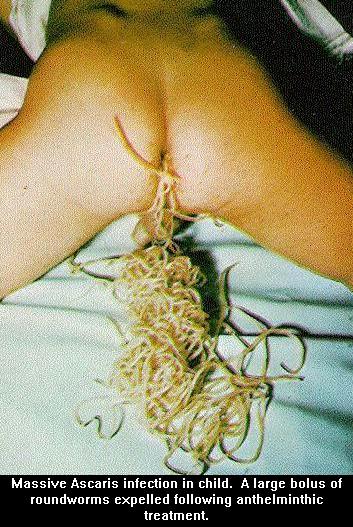 In this month's National Magazine, First for Women, the cover story features Dr. Robert O. Young who suggests that the natural by-products of parasites are acids that make 32% of women in the US sick, tired and fat.
That's 1 and 3 Americans who are affected!
Dr. Young also suggest that the acidic waste products from parasites can damage organs, break down muscle tissue and cause the central nervous system to become sluggish.
Ironically, the body's self-preservation system can make the problem worse by shuttling acid waste from parasites into the fat cells and slowing metabolic rate so more portective fat must be stored.
This is the body's way of getting acids out of circulation, but it makes losing weight virtually impossible.
To learn more about how acidic wastes are making you sick, tired and fat may I suggest reading our book, The pH Miracle for Weight Loss or you can pick up a copy of First for Women at your local grocery or magazine store.
Ask for the October 30th issue with Georgia on the front cover who lost over 65 pounds in six weeks. Average weight loss is twenty-two pounds in two weeks on the pH Miracle living program.
If you are not currently part of our pH Miracle healthy living community, sign up now by visiting our website at: www.phmiracleliving.comYou can also learn more by going to www.articlesofhealth.blogspot.com
Monday, December 11, 2006
Don't Blame Racket for Tennis Elbow
(HealthDay News) -- Your swing, not your racket, may be the culprit when it comes to developing tennis elbow (tendonitis), experts report.
An improperly-sized -- either too small or too large -- tennis racket grip does not cause the common malady, according to a study in the December issue of the American Journal of Sports Medicine.
"An optimal grip size may influence the force with which a player hits the ball, but variations in grip size are unlikely to be contributing factors in overuse injuries such as tennis elbow," researcher Dr. George F. Hatch III, of the department of orthopedic surgery at the University of Southern California's Keck School of Medicine in Los Angeles, said in a prepared statement.
The finding goes against traditional advice from doctors, he added.
"Clinicians who treat patients with tennis elbow often tell them to try a different size grip in order to alleviate muscle fatigue. Our study demonstrates that those recommendations have no scientific basis. Therefore, it is reasonable to recommend whatever grip size feels most comfortable for them," Hatch said.
He and his colleagues studied 16 NCAA Division I and II tennis players (10 men, 6 women) with no prior history of elbow problems. The players were told to do single-handed backhand strokes using identical tennis rackets with three different grip sizes. While the players used the rackets, the researchers measured the firing patterns of muscles in the players' forearms.
The different grip sizes did not affect the firing patterns of the muscles.
"Based on our data, we recommend recreational tennis players use the currently accepted grip size measurement technique as a starting point when picking a grip size. However, the player should feel free to increase or decrease the size of the grip based upon what feels most comfortable," Hatch said.
Instead, players should look to changing their technique to help ease tennis elbow, he said, since "previous studies have shown that improper form is one of the biggest risk factors for the development of tendonitis."
More information
The American Academy of Orthopaedic Surgeons has more about tennis elbow.
An improperly-sized -- either too small or too large -- tennis racket grip does not cause the common malady, according to a study in the December issue of the American Journal of Sports Medicine.
"An optimal grip size may influence the force with which a player hits the ball, but variations in grip size are unlikely to be contributing factors in overuse injuries such as tennis elbow," researcher Dr. George F. Hatch III, of the department of orthopedic surgery at the University of Southern California's Keck School of Medicine in Los Angeles, said in a prepared statement.
The finding goes against traditional advice from doctors, he added.
"Clinicians who treat patients with tennis elbow often tell them to try a different size grip in order to alleviate muscle fatigue. Our study demonstrates that those recommendations have no scientific basis. Therefore, it is reasonable to recommend whatever grip size feels most comfortable for them," Hatch said.
He and his colleagues studied 16 NCAA Division I and II tennis players (10 men, 6 women) with no prior history of elbow problems. The players were told to do single-handed backhand strokes using identical tennis rackets with three different grip sizes. While the players used the rackets, the researchers measured the firing patterns of muscles in the players' forearms.
The different grip sizes did not affect the firing patterns of the muscles.
"Based on our data, we recommend recreational tennis players use the currently accepted grip size measurement technique as a starting point when picking a grip size. However, the player should feel free to increase or decrease the size of the grip based upon what feels most comfortable," Hatch said.
Instead, players should look to changing their technique to help ease tennis elbow, he said, since "previous studies have shown that improper form is one of the biggest risk factors for the development of tendonitis."
More information
The American Academy of Orthopaedic Surgeons has more about tennis elbow.
Drug-Coated Stents Don't Boost Death Risk, U.S. Advisers Say
(HealthDay News) -- Although drug-coated stents might pose a clotting risk, they do not increase the chances of heart attack or death, a U.S. Food and Drug Administration advisory panel concluded Thursday.
While the panel of 21 experts broadly dismissed the more serious risks, they split on saying the clotting danger was real in comparison with older, bare-metal stents. They agreed only that more study of the drug-coated devices, which hold open the arteries of at least 3 million Americans, is needed, the Associated Press reported.
"There may be something there. From an evidence-based perspective, I can't say definitively one way or another," said panel member Dr. Norman Kato, of the Cardiac Care Medical Group of Encino, Calif.
Another panelist, Dr. Steve Nissen of the Cleveland Clinic, said the clotting risk was real and that only its magnitude was in question. "There is pretty unequivocal evidence," he said.
The panel, convened to advise the FDA on the safety of the stents, said any concerns fail to outweigh the benefits of the devices. On Friday, the panel will tackle the issue of the off-label use of drug-coated stents, which are inserted in patients during artery-clearing surgery called angioplasty.
The FDA isn't bound to follow the recommendations of its advisory panels, but usually does.
The key issue is whether the drug-coated stents, which have become dominant tools in the field of cardiovascular surgery since their introduction three years ago, create a heightened risk of potentially fatal blood clots. An estimated 6 million people worldwide have received the devices.
During testimony Thursday, FDA representatives concluded that existing data does indicate an increased risk for blood clots with drug-eluting stents. But they also noted the studies supporting such a conclusion were small and not necessarily conclusive.
FDA medical officer Dr. Takahiro Uchida told the panel: "It is important to note FDA does not regulate the practice of medicine. However, FDA is responsible for any use of a device that raises a public health concern," the AP reported.
The drug-coated stents release medicine designed to limit the incidence of arteries reclosing after angioplasty. The problem of reclosing is more frequently seen with traditional bare metal stents. Such re-closures require repeat surgery.
But a number of recent studies have suggested that drug-coated stents, which can cost thousands of dollars each, have long-term dangers -- most specifically, the risk of clots that could cause heart attacks. According to some estimates, drug-coated stents may cause an extra 2,160 deaths in the United States each year.
Reaction to the panel's judgment was mixed.
"I certainly hope this is a preliminary report since there is more information that should be reviewed and discussed before a final report is issued and a final decision made," said Dr. Robert Michler, director of the heart center at Montefiore Medical Center/Albert Einstein College of Medicine in New York City. "There are concerns regarding thrombosis [clotting], but there is a much broader issue here. There is widespread use of these devices which may have exceeded their appropriate use, and it's those patients we're even more concerned about."
Stents are widely used to treat three-vessel disease, although the scientific backing for their use only extends to one- and two-vessel disease, Michler explained. In addition, "there has never been demonstrated a survival benefit with stents," he said. "The only survival benefit for patients has been demonstrated with bypass surgery. We have widespread off-label use of stents for multi-vessel disease and patients dying who could have benefited from bypass surgery, and then you have the additional life-threatening situation of stent thrombosis. So what we are most concerned about is the public welfare in terms of receiving adequate informed consent about the limitations of widespread use of stents, drug-eluting stents in particular."
"Essentially, this is a very precarious situation for patients to be in who may need therapy for coronary artery disease," Michler said. "It's an enormous public health issue."
"We need better information," added Dr. Kevin Schulman, a professor of medicine at Duke University School of Medicine. "This technology has been used in a lot of patients, and it's uncomfortable that we don't have more data on the outcomes of patients in real-world clinical trials and we still have fairly substantial questions on the appropriate way to use the technology."
But one expert seemed satisfied with the panel's decision.
"My opinion is that the benefits do outweigh the risks," said Dr. Michael Attubato, associate director of invasive and interventional cardiology at New York University Medical Center. "It appears that there may be a small or increased risk of late clotting. I do believe this is a major advance in technology. Unless I see other data, I believe the benefits outweigh the risks."
Thursday's testimony was designed to address two main questions: who should or should not get the devices, and what supplementary therapies are appropriate.
According to the Washington Post, hundreds of people assembled in the large meeting room in Gaithersburg, Md., including representatives from Johnson & Johnson and Boston Scientific Corp., which make the two drug-eluting stents sold in the United States. Others present included medical device makers, physicians and patient advocates.
Anti-clotting medications such as Plavix (clopidogrel) and aspirin are often prescribed after the drug-coated stents have been implanted. And two studies published this week, in the Journal of the American College of Cardiology and the Journal of the American Medical Association, linked the increased risk of clots to discontinuation of Plavix.
Schulman, who co-authored the JAMA report, said the Duke researchers found that patients who get drug-eluting stents need to stay on blood thinners much longer than currently indicated.
"Our analysis says if you don't use stents correctly, you could be hurting patients," he said. "What kind of medication people need to be on long term is a very major concern."
More information
For more on stents, visit the American Heart Association.
While the panel of 21 experts broadly dismissed the more serious risks, they split on saying the clotting danger was real in comparison with older, bare-metal stents. They agreed only that more study of the drug-coated devices, which hold open the arteries of at least 3 million Americans, is needed, the Associated Press reported.
"There may be something there. From an evidence-based perspective, I can't say definitively one way or another," said panel member Dr. Norman Kato, of the Cardiac Care Medical Group of Encino, Calif.
Another panelist, Dr. Steve Nissen of the Cleveland Clinic, said the clotting risk was real and that only its magnitude was in question. "There is pretty unequivocal evidence," he said.
The panel, convened to advise the FDA on the safety of the stents, said any concerns fail to outweigh the benefits of the devices. On Friday, the panel will tackle the issue of the off-label use of drug-coated stents, which are inserted in patients during artery-clearing surgery called angioplasty.
The FDA isn't bound to follow the recommendations of its advisory panels, but usually does.
The key issue is whether the drug-coated stents, which have become dominant tools in the field of cardiovascular surgery since their introduction three years ago, create a heightened risk of potentially fatal blood clots. An estimated 6 million people worldwide have received the devices.
During testimony Thursday, FDA representatives concluded that existing data does indicate an increased risk for blood clots with drug-eluting stents. But they also noted the studies supporting such a conclusion were small and not necessarily conclusive.
FDA medical officer Dr. Takahiro Uchida told the panel: "It is important to note FDA does not regulate the practice of medicine. However, FDA is responsible for any use of a device that raises a public health concern," the AP reported.
The drug-coated stents release medicine designed to limit the incidence of arteries reclosing after angioplasty. The problem of reclosing is more frequently seen with traditional bare metal stents. Such re-closures require repeat surgery.
But a number of recent studies have suggested that drug-coated stents, which can cost thousands of dollars each, have long-term dangers -- most specifically, the risk of clots that could cause heart attacks. According to some estimates, drug-coated stents may cause an extra 2,160 deaths in the United States each year.
Reaction to the panel's judgment was mixed.
"I certainly hope this is a preliminary report since there is more information that should be reviewed and discussed before a final report is issued and a final decision made," said Dr. Robert Michler, director of the heart center at Montefiore Medical Center/Albert Einstein College of Medicine in New York City. "There are concerns regarding thrombosis [clotting], but there is a much broader issue here. There is widespread use of these devices which may have exceeded their appropriate use, and it's those patients we're even more concerned about."
Stents are widely used to treat three-vessel disease, although the scientific backing for their use only extends to one- and two-vessel disease, Michler explained. In addition, "there has never been demonstrated a survival benefit with stents," he said. "The only survival benefit for patients has been demonstrated with bypass surgery. We have widespread off-label use of stents for multi-vessel disease and patients dying who could have benefited from bypass surgery, and then you have the additional life-threatening situation of stent thrombosis. So what we are most concerned about is the public welfare in terms of receiving adequate informed consent about the limitations of widespread use of stents, drug-eluting stents in particular."
"Essentially, this is a very precarious situation for patients to be in who may need therapy for coronary artery disease," Michler said. "It's an enormous public health issue."
"We need better information," added Dr. Kevin Schulman, a professor of medicine at Duke University School of Medicine. "This technology has been used in a lot of patients, and it's uncomfortable that we don't have more data on the outcomes of patients in real-world clinical trials and we still have fairly substantial questions on the appropriate way to use the technology."
But one expert seemed satisfied with the panel's decision.
"My opinion is that the benefits do outweigh the risks," said Dr. Michael Attubato, associate director of invasive and interventional cardiology at New York University Medical Center. "It appears that there may be a small or increased risk of late clotting. I do believe this is a major advance in technology. Unless I see other data, I believe the benefits outweigh the risks."
Thursday's testimony was designed to address two main questions: who should or should not get the devices, and what supplementary therapies are appropriate.
According to the Washington Post, hundreds of people assembled in the large meeting room in Gaithersburg, Md., including representatives from Johnson & Johnson and Boston Scientific Corp., which make the two drug-eluting stents sold in the United States. Others present included medical device makers, physicians and patient advocates.
Anti-clotting medications such as Plavix (clopidogrel) and aspirin are often prescribed after the drug-coated stents have been implanted. And two studies published this week, in the Journal of the American College of Cardiology and the Journal of the American Medical Association, linked the increased risk of clots to discontinuation of Plavix.
Schulman, who co-authored the JAMA report, said the Duke researchers found that patients who get drug-eluting stents need to stay on blood thinners much longer than currently indicated.
"Our analysis says if you don't use stents correctly, you could be hurting patients," he said. "What kind of medication people need to be on long term is a very major concern."
More information
For more on stents, visit the American Heart Association.
College Students Can Pack Stress for Holiday Home Stay
(HealthDay News) -- When college students return home for the holidays, they can bring more than presents with them. They can also cause stress and tension in the home as the entire family makes adjustments, says an expert at Washington University in St. Louis.
"The winter break is the first extended time at home for most freshmen since they left for college in the summer," Karen Levin Coburn, associate vice chancellor for students and dean of the freshman transition at the university, said in a prepared statement.
"The first semester at college may have been their first glimpse of freedom. They wonder if it is possible to go home and still maintain their newfound independence," said Coburn, who is co-author of the book Letting Go: A Parent's Guide to Understanding the College Years.
She offered some advice.
"Parents should not be shocked when students come home with bags under their eyes. Most students have just finished finals, they are exhausted, and they may sleep a lot the first day or two. Parents who have invested money and energy in their children's education may not understand the zombie re-entering their home," Coburn said.
Younger siblings may need support from their parents in order to deal with the changes caused by an older siblings' return home from college for the holidays.
"For example, the middle sibling has been used to being the eldest, and it may be more of a drag than a delight to have big sister home again," Coburn noted.
If the returning student is an only child, parents may realize they've grown accustomed to privacy and a clean home.
"Though parents enjoy the reinvigorated hustle and bustle of family life, they may have moments of longing for the spontaneity and quiet of life on their own. Actually, the ambivalence is not unlike the ambivalence their child feels about being back home versus being on his or her own," Coburn said.
Because money is tight for many parents of college students, finances may become a major issue during the holiday visit. Money issues need to be discussed openly, Coburn said.
"Try to find a time when the student is open to discussion and tactfully try to help him or her understand the necessity of budgeting," she recommended.
Here are some other tips for parents:
Don't try to impose old rules (such as curfews) from the student's high school days.
Plan early and consult with your returning college student when making arrangements for family parties, vacations and other activities.
Don't do everything for your student. Let him or her take responsibility for the things they've been handling while away at college, such as medical appointments, finances, and car and computer maintenance.
More information
The University of Minnesota has more holiday advice for parents of college students.
"The winter break is the first extended time at home for most freshmen since they left for college in the summer," Karen Levin Coburn, associate vice chancellor for students and dean of the freshman transition at the university, said in a prepared statement.
"The first semester at college may have been their first glimpse of freedom. They wonder if it is possible to go home and still maintain their newfound independence," said Coburn, who is co-author of the book Letting Go: A Parent's Guide to Understanding the College Years.
She offered some advice.
"Parents should not be shocked when students come home with bags under their eyes. Most students have just finished finals, they are exhausted, and they may sleep a lot the first day or two. Parents who have invested money and energy in their children's education may not understand the zombie re-entering their home," Coburn said.
Younger siblings may need support from their parents in order to deal with the changes caused by an older siblings' return home from college for the holidays.
"For example, the middle sibling has been used to being the eldest, and it may be more of a drag than a delight to have big sister home again," Coburn noted.
If the returning student is an only child, parents may realize they've grown accustomed to privacy and a clean home.
"Though parents enjoy the reinvigorated hustle and bustle of family life, they may have moments of longing for the spontaneity and quiet of life on their own. Actually, the ambivalence is not unlike the ambivalence their child feels about being back home versus being on his or her own," Coburn said.
Because money is tight for many parents of college students, finances may become a major issue during the holiday visit. Money issues need to be discussed openly, Coburn said.
"Try to find a time when the student is open to discussion and tactfully try to help him or her understand the necessity of budgeting," she recommended.
Here are some other tips for parents:
Don't try to impose old rules (such as curfews) from the student's high school days.
Plan early and consult with your returning college student when making arrangements for family parties, vacations and other activities.
Don't do everything for your student. Let him or her take responsibility for the things they've been handling while away at college, such as medical appointments, finances, and car and computer maintenance.
More information
The University of Minnesota has more holiday advice for parents of college students.
Victim Count in Taco Bell E. coli Outbreak Still Rising
(HealthDay News) -- U.S. health officials are still trying to determine the source of the E. coli outbreak linked to Taco Bell restaurants that has now sickened scores of people in at least six states.
And they predicted that the number of victims will rise in coming days, because symptoms of E. coli O157 infection sometimes don't appear for up to a week after eating contaminated food.
"Illnesses are still occurring," Dr. Christopher Braden, an epidemiologist with the U.S. Centers for Disease Control and Prevention, told a news teleconference Friday afternoon. "The outbreak is still going on."
Reports of infections have spread beyond the initial outbreaks in New Jersey, New York and Pennsylvania, to Delaware, South Carolina and Utah, CDC health officials said.
As of Friday afternoon, the CDC reported 63 confirmed cases of E. coli infection in six states.
New Jersey has 28 confirmed cases; New York has 22; Pennsylvania has 9, Delaware has 2, and South Carolina and Utah have one each, according to the CDC list.
But, state health department officials report that New Jersey also has 55 potential cases, and New York has 220, including 177 on Long Island, according to Bloomberg News.
Of the confirmed cases on the CDC list, 79 percent of the victims required hospitalization and 11 percent have developed a form of kidney failure called hemolytic-uremic syndrome, the agency said.
Green onions have been considered a possible source of the infections but that still hasn't been confirmed, Braden added.
Besides testing vegetables, the CDC and the U.S. Food and Drug Administration are examining cheese used at Taco Bell restaurants, said Dr. David Acheson, chief medical officer at the FDA's Center for Food Safety and Applied Nutrition.
"There is no data to implicate or rule out any food item," Acheson added during the teleconference, stressing that green onions haven't been confirmed as the source of the outbreak. The CDC and FDA are testing food samples from Taco Bell restaurants and from food distributors. Such samples are routinely set aside in case health problems arise, Acheson said.
Several laboratories are also testing food samples from Taco Bell restaurants, according to the CDC. Some of those preliminary tests have indicated the possible presence of E. coli O157 in samples of green onions, but the tests have not been confirmed.
Those tests have led officials to focus on Boskovich Farms in Oxnard, Calif., which grows the green onions for the supplier of Taco Bell, The New York Times reported Friday.
Earlier this week, Taco Bell removed the green onions, also called scallions, from its 5,800 restaurants nationwide. "We're focused on working with the authorities to find the root cause," said Rob Poetsch, a spokesman for Yum! Foods, which owns Taco Bell.
However, it still isn't clear if the green onions could have been contaminated at Boskovich Farms; at a Ready Pac Produce plant in Florence, N.J., where they were processed; or at a warehouse of McLane Foodservice in Burlington Township, N.J., which distributed them to Taco Bell outlets in eight northeastern states.
Laboratory testing found three samples of green onions that appeared to have a harsh strain of E. coli.
However, FDA spokesman Michael L. Herndon said, "All we have been given is presumptive evidence only from a contract lab whose results we can't confirm."
Federal authorities said Thursday that there were no plans to issue general warnings about green onions, the Associated Press reported.
Ready Pac is the sole supplier of green onions to Taco Bell. This is the second E. coli scare to hit Ready Pac in the past four months.
In September, spinach with the Ready Pac label was among the brands pulled from the shelves after federal authorities traced a nationwide E. coli outbreak to a Natural Selections processing plant that bags Ready Pac fresh spinach, the AP said. That outbreak sickened 199 people in 26 states and Canada and left three dead.
Also in September, an outbreak of salmonella was traced to tomatoes served in restaurants. The outbreak sickened 183 people in 21 states, as well as two people in Canada.
Meanwhile, the first lawsuit stemming from the latest E. coli outbreak has been filed, by the family of an 11-year-old Long Island boy who got sick after eating at a Long Island Taco Bell. The suit against Taco Bell seeks an undisclosed amount in damages.
One expert thinks the recent spate of food-borne problems is a sign of new dangers in the U.S. food production and distribution system, which has become increasingly mechanized.
"This [the latest E. coli outbreak] is one of a series of outbreaks, which represent a change in the pattern of food-borne outbreaks," said Dr. Pascal James Imperato, chairman of the Department of Preventive Medicine and Community Health and director of the Master of Public Health Program at SUNY Downstate Medical Center in Brooklyn, N.Y.
Previously, E. coli contamination occurred at the place where food was served as opposed to the source of growing and production, Imperato said. "This outbreak and the spinach outbreak are really a newer development. We are now seeing contamination at the source of production," said Imperato, a former New York City health commissioner.
Since growing and distributing vegetables has become an "agribusiness," with fewer but larger growers, processors and distributors, there's more chance of contamination, Imperato added. Contamination can occur from irrigation, which can spread E. coli from neighboring animal grazing lots, and during the packaging in large plants. And that packaging increasingly relies on plastic bags, which create an ideal environment for bacteria such as E. colito grow, he explained.
Imperato said he thought the only solution to the problem is increased government oversight and regulation.
Currently, the FDA is responsible for monitoring produce and seafood, while the U.S. Department of Agriculture has oversight for meat and poultry. But, while the FDA has published sanitary standards for produce farmers, the agency has no regulatory authority to enforce those standards. Also, the FDA has few inspectors to even observe the level of voluntary compliance to those standards, Imperato said.
"It's going to require more rigorous oversight and the implantation and adherence to standards from the time the crop is grown in the field through the entire processing of the product and its distribution," he added.
Acheson agreed that new farming and distribution practices have increased the risk for contamination. Given the latest outbreak and the spinach problem in September, "it's fairly clear that something needs to changed," he said.
New regulation may be a part of the solution, Acheson said. But, he added, more may have to be done, including changing some farming and processing practices.
E. coli O157:H7 is one of hundreds of strains of the bacterium Escherichia coli. Although most strains are harmless, this strain produces a powerful toxin that can cause severe illness, such as bloody diarrhea and abdominal cramps. The symptoms usually clear up within five to 10 days, according to the CDC.
More information
For more on the latest E. coli outbreak, visit the U.S. Centers for Disease Control and Prevention.
And they predicted that the number of victims will rise in coming days, because symptoms of E. coli O157 infection sometimes don't appear for up to a week after eating contaminated food.
"Illnesses are still occurring," Dr. Christopher Braden, an epidemiologist with the U.S. Centers for Disease Control and Prevention, told a news teleconference Friday afternoon. "The outbreak is still going on."
Reports of infections have spread beyond the initial outbreaks in New Jersey, New York and Pennsylvania, to Delaware, South Carolina and Utah, CDC health officials said.
As of Friday afternoon, the CDC reported 63 confirmed cases of E. coli infection in six states.
New Jersey has 28 confirmed cases; New York has 22; Pennsylvania has 9, Delaware has 2, and South Carolina and Utah have one each, according to the CDC list.
But, state health department officials report that New Jersey also has 55 potential cases, and New York has 220, including 177 on Long Island, according to Bloomberg News.
Of the confirmed cases on the CDC list, 79 percent of the victims required hospitalization and 11 percent have developed a form of kidney failure called hemolytic-uremic syndrome, the agency said.
Green onions have been considered a possible source of the infections but that still hasn't been confirmed, Braden added.
Besides testing vegetables, the CDC and the U.S. Food and Drug Administration are examining cheese used at Taco Bell restaurants, said Dr. David Acheson, chief medical officer at the FDA's Center for Food Safety and Applied Nutrition.
"There is no data to implicate or rule out any food item," Acheson added during the teleconference, stressing that green onions haven't been confirmed as the source of the outbreak. The CDC and FDA are testing food samples from Taco Bell restaurants and from food distributors. Such samples are routinely set aside in case health problems arise, Acheson said.
Several laboratories are also testing food samples from Taco Bell restaurants, according to the CDC. Some of those preliminary tests have indicated the possible presence of E. coli O157 in samples of green onions, but the tests have not been confirmed.
Those tests have led officials to focus on Boskovich Farms in Oxnard, Calif., which grows the green onions for the supplier of Taco Bell, The New York Times reported Friday.
Earlier this week, Taco Bell removed the green onions, also called scallions, from its 5,800 restaurants nationwide. "We're focused on working with the authorities to find the root cause," said Rob Poetsch, a spokesman for Yum! Foods, which owns Taco Bell.
However, it still isn't clear if the green onions could have been contaminated at Boskovich Farms; at a Ready Pac Produce plant in Florence, N.J., where they were processed; or at a warehouse of McLane Foodservice in Burlington Township, N.J., which distributed them to Taco Bell outlets in eight northeastern states.
Laboratory testing found three samples of green onions that appeared to have a harsh strain of E. coli.
However, FDA spokesman Michael L. Herndon said, "All we have been given is presumptive evidence only from a contract lab whose results we can't confirm."
Federal authorities said Thursday that there were no plans to issue general warnings about green onions, the Associated Press reported.
Ready Pac is the sole supplier of green onions to Taco Bell. This is the second E. coli scare to hit Ready Pac in the past four months.
In September, spinach with the Ready Pac label was among the brands pulled from the shelves after federal authorities traced a nationwide E. coli outbreak to a Natural Selections processing plant that bags Ready Pac fresh spinach, the AP said. That outbreak sickened 199 people in 26 states and Canada and left three dead.
Also in September, an outbreak of salmonella was traced to tomatoes served in restaurants. The outbreak sickened 183 people in 21 states, as well as two people in Canada.
Meanwhile, the first lawsuit stemming from the latest E. coli outbreak has been filed, by the family of an 11-year-old Long Island boy who got sick after eating at a Long Island Taco Bell. The suit against Taco Bell seeks an undisclosed amount in damages.
One expert thinks the recent spate of food-borne problems is a sign of new dangers in the U.S. food production and distribution system, which has become increasingly mechanized.
"This [the latest E. coli outbreak] is one of a series of outbreaks, which represent a change in the pattern of food-borne outbreaks," said Dr. Pascal James Imperato, chairman of the Department of Preventive Medicine and Community Health and director of the Master of Public Health Program at SUNY Downstate Medical Center in Brooklyn, N.Y.
Previously, E. coli contamination occurred at the place where food was served as opposed to the source of growing and production, Imperato said. "This outbreak and the spinach outbreak are really a newer development. We are now seeing contamination at the source of production," said Imperato, a former New York City health commissioner.
Since growing and distributing vegetables has become an "agribusiness," with fewer but larger growers, processors and distributors, there's more chance of contamination, Imperato added. Contamination can occur from irrigation, which can spread E. coli from neighboring animal grazing lots, and during the packaging in large plants. And that packaging increasingly relies on plastic bags, which create an ideal environment for bacteria such as E. colito grow, he explained.
Imperato said he thought the only solution to the problem is increased government oversight and regulation.
Currently, the FDA is responsible for monitoring produce and seafood, while the U.S. Department of Agriculture has oversight for meat and poultry. But, while the FDA has published sanitary standards for produce farmers, the agency has no regulatory authority to enforce those standards. Also, the FDA has few inspectors to even observe the level of voluntary compliance to those standards, Imperato said.
"It's going to require more rigorous oversight and the implantation and adherence to standards from the time the crop is grown in the field through the entire processing of the product and its distribution," he added.
Acheson agreed that new farming and distribution practices have increased the risk for contamination. Given the latest outbreak and the spinach problem in September, "it's fairly clear that something needs to changed," he said.
New regulation may be a part of the solution, Acheson said. But, he added, more may have to be done, including changing some farming and processing practices.
E. coli O157:H7 is one of hundreds of strains of the bacterium Escherichia coli. Although most strains are harmless, this strain produces a powerful toxin that can cause severe illness, such as bloody diarrhea and abdominal cramps. The symptoms usually clear up within five to 10 days, according to the CDC.
More information
For more on the latest E. coli outbreak, visit the U.S. Centers for Disease Control and Prevention.
Sunday, December 03, 2006
Health Tip: Fish is Good for Your Heart
(HealthDay News) -- Adding fish to your diet can help reduce your risk of a heart attack. The American Heart Association recommends eating at least two servings a week of fatty fish, high in omega-3 fatty acids.
Fish that are particularly high in these heart-healthy compounds include mackeral, salmon, lake trout, sardines, herring and albacore tuna.
In studies, omega-3 fatty acids have been shown to slightly reduce blood pressure, reduce plaque buildup in the arteries, and lower cholesterol levels. They can also reduce the risk of potentially dangerous heartbeat irregularities.
Fish that are particularly high in these heart-healthy compounds include mackeral, salmon, lake trout, sardines, herring and albacore tuna.
In studies, omega-3 fatty acids have been shown to slightly reduce blood pressure, reduce plaque buildup in the arteries, and lower cholesterol levels. They can also reduce the risk of potentially dangerous heartbeat irregularities.
Health Tip: Blood-Thinning Drugs May Have Side Effects
(HealthDay News) -- Blood-thinning medications are typically prescribed after a heart attack or stroke to prevent a recurrence.
But the American Heart Association cautions that these drugs may have significant side effects:
But the American Heart Association cautions that these drugs may have significant side effects:
- Bruising easily.
- Nosebleeds.
- Bleeding gums.
- Excessive bleeding caused by shaving cuts.
If you have any of these symptoms after starting blood-thinning therapy, tell your doctor.
Blood Levels of Uric Acid Predict Hypertension in Blacks
 (HealthDay News) -- Higher levels of uric acid in the blood are associated with an increased risk of high blood pressure in black Americans, a new study finds.
The findings suggest that a simple blood test could help predict the risk of high blood pressure in blacks. It also suggests that medications to reduce uric acid levels may help lower hypertension-related health problems.
In the study, a team from Wake Forest University Baptist Medical Center in Winston-Salem, N.C., tracked over 9,100 people, ages 45 to 64, who did not have high blood pressure at the start of the study. The participants' blood pressure was checked every three years over four examinations.
The researchers found that, overall, people with uric acid levels in the highest 25 percent (quartile) had about a 15 percent increased risk of high blood pressure.
The link between high uric acid levels and hypertension was especially strong in black men.
Those with uric acid levels in the highest quartile had a two-fold increased risk of hypertension than black men in the lowest quartile.
The association was also strong in black women. Those in the highest quartile were 30 percent more likely to develop high blood pressure than those in the lowest quartile.
The study was published online in the journal Hypertension. More research needs to be done to determine the health effects of high uric acid, especially in blacks, the study authors said.
Uric acid levels are influenced by diet. Most uric acid is eliminated in urine. Very high levels of uric acid can cause gout.
More information
The U.S. National Library of Medicine has more about uric acid.
Booklet Details Low-Income Drug Subsidy Benefits
(HealthDay News) -- A national campaign has been launched to reach about 3.25 million modest-income older Americans who are eligible for Medicare Extra Help with prescription drugs but have not yet signed up for the program.
As part of the campaign, a free information booklet is being offered by the National Alliance for Hispanic Health and the American Association of Retired Persons.
Extra Help -- also called low-income subsidy (LIS) -- is a benefit paid for by Medicare to help people with limited incomes and resources pay their monthly premiums, yearly deductible, and co-payments for medicines under the Medicare prescription drug plan.
A special enrollment period, through Dec. 31, 2006, is being offered by Medicare to beneficiaries who quality for Extra Help but didn't apply before the original May 15, 2006 deadline.
"This campaign has one very simple goal -- to reach the millions of modest-income Americans of all backgrounds and regions of the nation who are eligible for Medicare prescription drug assistance and don't know it," Dr. Jane L. Delgado, president and CEO of the National Alliance for Hispanic Health, said in a prepared statement.
"We need the help of local health care providers, community leaders, elected officials, and the media across the nation to ensure this information gets to those who can benefit from it," she said.
More information
Medicare beneficiaries can get the free information booklet by calling the National Alliance for Hispanic Health at 1-866-783-2645.
As part of the campaign, a free information booklet is being offered by the National Alliance for Hispanic Health and the American Association of Retired Persons.
Extra Help -- also called low-income subsidy (LIS) -- is a benefit paid for by Medicare to help people with limited incomes and resources pay their monthly premiums, yearly deductible, and co-payments for medicines under the Medicare prescription drug plan.
A special enrollment period, through Dec. 31, 2006, is being offered by Medicare to beneficiaries who quality for Extra Help but didn't apply before the original May 15, 2006 deadline.
"This campaign has one very simple goal -- to reach the millions of modest-income Americans of all backgrounds and regions of the nation who are eligible for Medicare prescription drug assistance and don't know it," Dr. Jane L. Delgado, president and CEO of the National Alliance for Hispanic Health, said in a prepared statement.
"We need the help of local health care providers, community leaders, elected officials, and the media across the nation to ensure this information gets to those who can benefit from it," she said.
More information
Medicare beneficiaries can get the free information booklet by calling the National Alliance for Hispanic Health at 1-866-783-2645.
Subscribe to:
Posts (Atom)

Health Begins In The Colon$19.99  The REAL Secret to Health is Finally Revealed! Did you know that disease starts and health begins in the colon? You can read more about how to better your health in Dr. Group's exclusive book |
